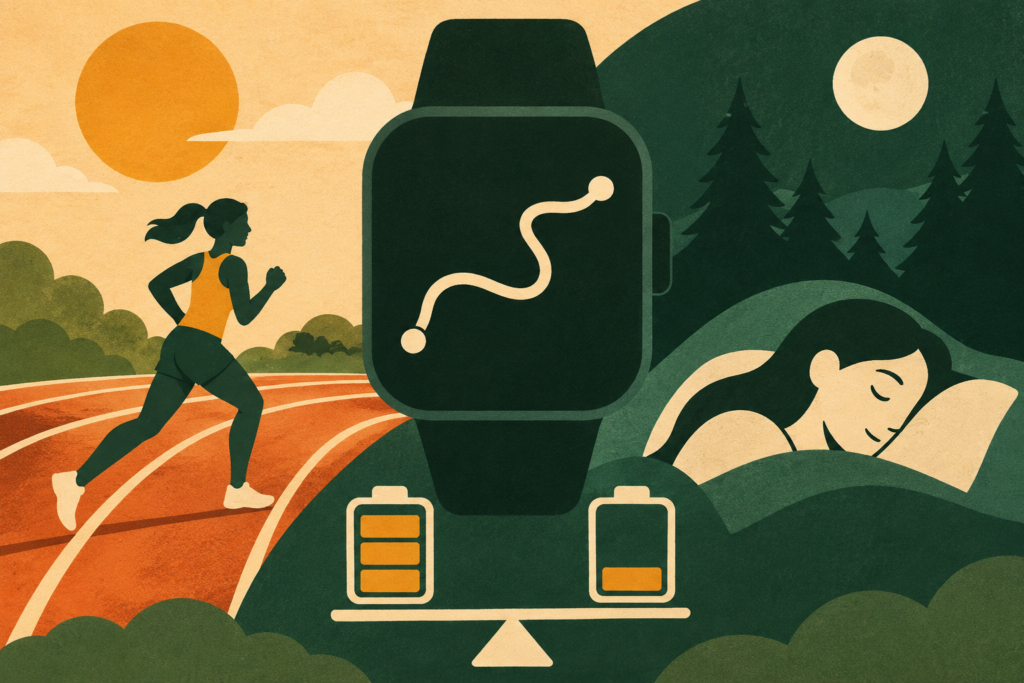
Motorola’s new Moto Watch 2 Fit, also called the Moto Watch Fit 27, brings Polar’s training and recovery tools to the Fit line. In its November 5 announcement, Motorola pairs Running Index and more detailed sleep analysis with a claim of up to 12 days between charges under light use. For someone who runs a few times a week and wants to understand the days in between, those insights are the main attraction.
The buying decision still has several conditions: battery life depends on the display mode, calls use a connected phone, and Motorola’s Qira assistant is promised for a later update. Choose it for the tracking features you expect to use regularly.
What existing Moto Watch Fit owners gain
The original Moto Watch Fit already offered built-in GPS, more than 100 sports modes, heart-rate monitoring and sleep tracking. Its user guide also documents an always-on display. Owners should therefore look for a reason to upgrade beyond another watch that counts steps or records a run.
There are hardware changes, but the screen has not grown: the original’s 1.9-inch OLED becomes a 1.85-inch gOLED panel. Motorola advertises up to 1,500 nits of peak brightness, versus the older model’s 1,000-nit specification. The new peak figure suggests more brightness headroom outdoors; it does not establish sustained sunlight readability. Both generations use Gorilla Glass 3.
The more consequential addition is interpretation. Polar explains that its Motorola partnership supplies algorithms that the manufacturer integrates into its own devices. That partnership began with the round Moto Watch earlier in 2026; its arrival on the Fit line gives this model a more substantial training and recovery role.
For running, focus on progress across comparable outings
Running Index estimates aerobic running performance from the relationship between heart rate and speed. In Polar’s explanation, the useful result is a trend: are you running faster at a similar effort, or covering your usual route with less cardiovascular effort? That is a more meaningful training question than simply accumulating completed workouts.
Keep the comparisons fair. Polar identifies heat, terrain, wind and dehydration among the factors that can change an individual result. A slower, hotter run can produce a different score without proving that your fitness has declined. Look for a pattern across similar outings before changing your routine around a number.
Motorola also claims improved outdoor positioning from dual-frequency GPS. For an existing Fit owner, the prospective benefit is accuracy. Check offline maps and navigation separately; neither follows from the GPS specification.
Energy Sources adds another way to interpret a workout. Polar describes it as an estimate of the proportions of carbohydrate, fat and protein used during exercise, calculated from heart rate and personal information. It can help explain why an easy session and a hard one place different demands on the body. Polar explicitly cautions against using those percentages as the recipe for a post-workout meal: exercise fuel estimates and nutritional needs are different things.
Sleep tracking answers two different questions
Sleep Plus Stages addresses what the night looked like: its duration, interruptions and estimated light, deep and REM sleep. Polar’s description of the algorithm explains that it uses wrist movement and optical measurements of the intervals between heartbeats. That makes the stage breakdown an inference from wearable sensors. It does not directly record brain activity, as a clinical sleep assessment can.
The practical value is noticing patterns. If later bedtimes repeatedly coincide with shorter or more fragmented nights, the history gives you something concrete to reconsider. A single disappointing sleep score is much less useful as a verdict on how your day will go. Your own sense of rest still belongs in the picture.
Nightly Recharge adds the recovery question. Polar’s recovery model combines the sleep assessment with signals reflecting how the autonomic nervous system settled during the early part of the night. Its explanation includes heart rate, heart-rate variability and breathing rate, interpreted against the wearer’s usual level.
That distinction matters when you have spent enough time in bed but still feel worn out. Polar notes that demanding days, late exercise and alcohol can influence those overnight signals. The useful comparison is with your own pattern over time. Neither the name “Recharge” nor a favorable score establishes that you are fully recovered or explains a medical symptom.
Daily activity should fit an ordinary day
The watch’s Daily Activity Goal, Daily Activity Score and Active Intensity Zones put everyday movement into context, while an inactivity reminder prompts a break. Polar’s activity-goal approach considers personal information and activity intensity. A deliberate brisk walk can therefore contribute differently from gentle movement around the house.
For a desk worker, the useful question becomes whether the day included meaningful activity as well as a workout. For someone starting an exercise habit, a personalized target can be easier to interpret than comparing raw step totals with a friend whose routine is completely different.
Smart Calories estimates energy expenditure using movement, heart-rate data and personal information. Treat it as a way to compare the demands of different days, with the uncertainty that comes with a calculation. It should not become an exact allowance of food you have “earned.”
Serene offers a more immediate use: a guided breathing break with feedback on the body’s response. Its value is providing a structured pause you can actually take. The watch also adds menstrual-cycle logging. Motorola classifies its readings as wellness estimates, and cycle logging is not contraception.
What the 12-day battery claim actually means
Motorola’s UK specifications distinguish three maximums:
- 12 days with the always-on display off.
- 7 days with the always-on display on.
- 16 days in low-power mode.
These are manufacturer estimates under light use and optimal conditions. Settings, temperature, battery condition and usage affect the result. The specifications do not establish continuous-GPS endurance or detail which functions low-power mode restricts.
The previous Fit advertised up to 16 days, too. Its published conditions do not supply a matching workout-and-display test schedule, so comparing that headline directly with the new 12-day figure cannot establish a battery regression. If you already own one, your charging experience is more useful than subtracting two advertising maximums.
Your phone remains part of the purchase
The new Fit has a proprietary operating system, built-in apps only and no LTE. Its microphone and speaker support calls through a connected phone with an active plan. That is useful with your phone nearby; it does not replace a cellular connection when you leave the phone behind.
Confirm compatibility with your handset before ordering. The original Fit required Android 12 or later. The new page names Google Play and the App Store but supplies no minimum phone-software versions. iPhone support needs explicit confirmation for this model; the App Store mention alone is insufficient.
Check data sharing separately, particularly if you already keep years of workouts elsewhere. Polar’s licensing announcement describes analytical technology, without promising the entire Polar watch ecosystem. The branding therefore does not establish Polar Flow access, Strava synchronization or export of workout files. If one of those is essential, require confirmation for this exact model before switching.
Qira is a later addition
Motorola’s watch announcement places Qira access in the coming months. It requires a Qira-compatible Motorola phone, an active watch connection, a Motorola account and a software update. Internet or cellular connectivity is required for full functionality; language and regional restrictions apply.
Lenovo’s broader Qira rollout announcement also describes availability as gradual and dependent on the device and market. Owning a Motorola handset, even one awaiting an Android update, is not enough to establish eligibility. If asking an assistant questions from your wrist is the main reason you want this watch, wait until that function is released for your phone and country.
Price and availability need a country check
As of November 8, Motorola’s global announcement lists a €99 starting MSRP. November 5 launch coverage reported €119. With those figures differing, check the price attached to your local offer before ordering.
Motorola announced a rollout to selected markets in Europe, the Middle East, Latin America, North America and Asia-Pacific over the coming weeks. U.S. shoppers still need a dollar price and firm local sales date: 9to5Google’s North American launch report supplied neither. A currency conversion would not establish an American MSRP.
For shoppers in the UK, Ireland and Austria, Motorola has local product pages. Check the actual ordering and delivery terms; the regional announcement does not promise that every country starts selling on the same day.
The strongest case for the new Fit is wanting more meaning from regular runs, overnight wear and everyday activity. Existing Fit owners who mainly want steps and workout records have less reason to rush. Buyers whose priorities are Qira, a particular data-export service or a specific phone should settle those requirements before paying.